
AI-Powered Email Marketing: What Should Marketers Automate — and What Should Stay Human?
Every marketer knows the feeling. You open your email platform, stare at a blank campaign, and realize you need to segment 15,000 subscribers, write three subject line variants, schedule sends across four time zones, and somehow personalize it all — before lunch. The pressure to send more, personalize deeper, and optimize faster keeps growing. AI-powered email marketing promises relief. And in 2026, that promise is largely real: 87% of businesses using AI now apply it to email marketing workflows, and advanced adopters deploy campaigns 28% faster than early-stage teams.
But here’s the tension. Forty percent of U.S. consumers say they would trust a retailer’s emails less if they knew AI had written them. Automating everything doesn’t just risk generic messaging — it risks eroding the very trust that makes email the highest-ROI channel most businesses have. The real question isn’t whether to use AI. It’s knowing exactly which tasks to hand over, which to keep human, and how to build a workflow where both sides make each other better.
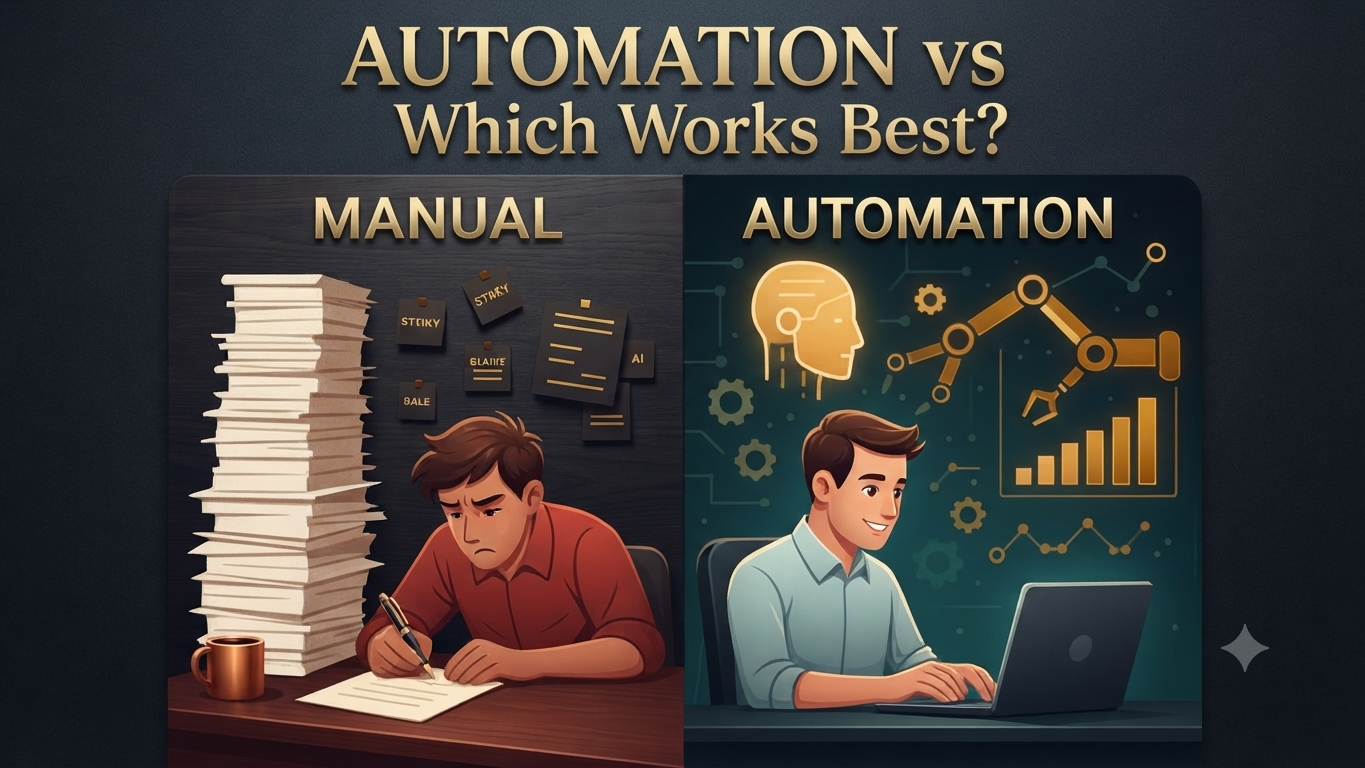
What Is AI-Powered Email Marketing?
AI-powered email marketing means using artificial intelligence — from rule-based automation to machine learning and generative models — to plan, create, send, and analyze email campaigns. It’s not one thing. It’s a spectrum.
Traditional email automation follows fixed rules: if a subscriber abandons a cart, wait two hours, then send a reminder. Predictive AI goes further by studying historical data to estimate who is likely to engage, churn, or purchase. Generative AI drafts subject lines, body copy, and even images from a prompt. AI-assisted optimization analyzes performance patterns and recommends adjustments — send times, audience segments, content variations.
Consider a simple example. A clothing brand wants to recover abandoned carts. Traditional automation sends the same reminder email to everyone after 24 hours. An AI-assisted workflow, by contrast, analyzes each shopper’s browsing history, purchase frequency, and engagement patterns to decide whether to send a reminder, a product recommendation, or a small incentive — and at what time that specific person is most likely to open it. Klaviyo’s personalized send time feature works this way: AI delivers each message when the individual is most likely to open, click, and buy.
The business benefit is measurable relevance. But AI outputs still depend on data quality, appropriate permissions, and human oversight. No platform’s AI can compensate for inaccurate CRM data, missing consent records, or a team that never reviews what goes out.
Why AI Is Changing Email Marketing in 2026
The shift isn’t theoretical. Adoption is already mainstream. According to Litmus’s State of Email 2026 report, 28% of marketers have AI deeply integrated into their email workflows and another 34% use it regularly — only 5% aren’t using it at all. Meanwhile, 40% of marketers named expanded AI use among their top three email priorities for 2026.
More relevant segmentation. AI now identifies customer groups using behavioral, transactional, and engagement data — not just demographics. You can spot high-intent prospects, at-risk subscribers, and loyal advocates without manually building dozens of filters.
Behavioral personalization. Instead of inserting a first name and calling it personalization, AI can recommend products, content, and offers based on real behavior. Klaviyo’s next best product recommendations dynamically show unique products based on each customer’s recent purchase history.
Automated customer journeys. AI-assisted workflows adapt on the fly. HubSpot’s Nurture Agent uses CRM data and live web research to rewrite subject lines, preview text, body copy, and CTAs for individual recipients at send time.
Faster experimentation. Teams that once needed two weeks to produce a single email now ship campaigns in minutes using AI-powered platforms. Enterprises using AI-powered email tools achieve 70% faster timelines than traditional methods.
Integration with CRM and e-commerce data. The real advantage comes when AI connects to your CRM, e-commerce platform, and behavioral tracking. ActiveCampaign’s Active Intelligence 3.0 now monitors your website for content changes and automatically drafts campaigns with that new content.
The privacy imperative. With India’s DPDP Act, GDPR, and Google/Yahoo bulk sender requirements tightening, consent and data handling are no longer optional. AI can help you manage this — but only if humans set the rules.
What Should Marketers Automate Using AI?
A. Audience Segmentation
AI can analyze behavioral, transactional, and engagement data to identify customer groups automatically — new subscribers, repeat buyers, inactive subscribers, high-intent prospects. What a human should review: Check for inaccurate assumptions, unfair profiling, and inappropriate use of sensitive data. Common mistake: Assuming AI segments are always accurate without validating against actual business outcomes.
B. Routine Email Personalization
AI can handle product recommendations, relevant content suggestions, lifecycle messages, and contextual offers at scale. What a human should review: The line between useful and intrusive personalization. A recommendation based on browsing history feels helpful; one that references a sensitive purchase feels invasive. Common mistake: Overpersonalizing using data customers didn’t expect you to use.
C. Welcome Emails and Onboarding Sequences
AI can automate welcome messages, introductory sequences, product education, and onboarding reminders. What a human should review: The initial brand messaging and strategic framing. The first email sets the relationship tone. Common mistake: Letting AI write the entire welcome sequence without human review — resulting in generic openings that fail to establish brand personality.
D. Abandoned Cart and Behavioral Emails
AI can trigger cart reminders, browse-related follow-ups, and post-purchase communications at optimal times. What a human should review: Consent, frequency limits, and relevance. Common mistake: Sending too many reminders without testing whether they actually recover carts — or annoy customers.
E. Lead Nurturing and Lifecycle Workflows
AI can support lead scoring, follow-up timing, educational sequences, and lifecycle communications. What a human should review: Predictive scores are estimates, not guarantees. A high score doesn’t mean someone will buy. Common mistake: Treating AI lead scores as definitive and deprioritizing prospects the model undervalues.
F. Subject Line and Email Copy Variations
Generative AI can produce initial drafts, alternative subject lines, preview text, and content variations quickly. What a human should review: Accuracy, clarity, tone, brand voice, and misleading claims. Common mistake: Sending AI-generated copy without checking prices, dates, or promotional terms.
G. Send-Time and Frequency Optimization
Supported tools may recommend delivery times or optimize frequency using engagement data. What a human should review: Whether the recommended timing aligns with the campaign’s purpose. Common mistake: Assuming AI can identify a universally perfect sending time — it can’t.
H. A/B Testing and Campaign Experimentation
AI can generate hypotheses, develop variants, analyze results, and suggest follow-up experiments. What a human should review: Test design and statistical significance. Common mistake: Declaring a winner based on insufficient data.
I. Reporting and Performance Analysis
AI can assist with campaign summaries, trend identification, anomaly detection, and recommendations. What a human should review: Validate AI-generated interpretations against the underlying data. Common mistake: Acting on AI recommendations without checking the source data for accuracy.
What Should Stay Human in Email Marketing?
A. Brand Voice and Creative Direction
A brand needs a recognizable personality, consistent messaging, and a distinct point of view. Human marketers define these guidelines; AI can accelerate drafting within them. ActiveCampaign’s Brand Kit automatically extracts tone and style from your website — but humans still decide what the brand stands for.
B. Empathy and Sensitive Communication
Complaints, billing disputes, customer frustration, and bereavement messages require careful human judgment. Poorly designed automation can send a cheerful promotional email to someone who just filed a complaint. AI doesn’t understand emotional context the way a trained account manager does.
C. Marketing Strategy and Business Goals
Humans must decide the purpose of a campaign, the target audience, positioning, offer, budget, and desired business outcome. AI can analyze and suggest — but marketers remain accountable for strategic decisions.
D. Ethical Judgment and Customer Trust
Transparency, consent, privacy, responsible personalization, and fairness are human responsibilities. AI can help you scale, but it can also scale mistakes. A wrong discount rate sent to your entire list because AI drafted it without review is a trust-eroding event.
E. Accuracy and Fact-Checking
Prices, product features, promotional terms, statistics, links, legal statements, and factual claims must be verified by humans. AI can invent details that sound plausible. Washington state now allows liability if a commercial email subject line contains false or misleading content — and the fact that AI wrote it does not remove the sender’s responsibility.
F. Final Approval for High-Impact Campaigns
Major launches, discounts, sensitive announcements, high-value customer communications, and campaigns with legal or reputational implications deserve human approval. Klaviyo’s own guidance is clear: keep a human in the loop — nothing sends without a marketer reviewing and approving it.
G. Genuine Relationship Building
Thoughtful storytelling, authentic communication, and meaningful brand interactions are human strengths. AI can suggest a framework, but the emotional resonance comes from human understanding of what matters to your customers.
AI vs Human vs AI + Human Collaboration
| Email Marketing Task | AI's Role | Human's Role | Recommended Approach |
|---|---|---|---|
| Audience segmentation | Identify patterns and group subscribers by behavior | Validate segments against business goals; check for unfair profiling | AI + Human |
| Subject line drafts | Generate multiple variations quickly | Select, refine, and approve for brand voice and accuracy | AI + Human |
| Email body copy | Draft initial content from prompts | Edit for tone, accuracy, and brand consistency | AI + Human |
| Product recommendations | Match products to individual behavior | Set rules for relevance and frequency | AI + Human |
| Send-time optimization | Predict optimal delivery windows | Set campaign objectives and override when needed | AI + Human |
| Abandoned cart reminders | Trigger and time messages automatically | Set frequency caps and review sequence logic | AI + Human |
| Lead scoring | Estimate purchase likelihood from data | Interpret scores in context; don't treat as definitive | AI + Human |
| Performance reporting | Summarize trends and flag anomalies | Validate against raw data; decide actions | AI + Human |
| Complaint handling | Route to appropriate team | Respond with empathy and judgment | Human-Lead |
| Compliance review | Flag potential issues | Ensure legal requirements are met | Human-Lead |
| Campaign strategy | Provide analysis and suggestions | Set goals, positioning, budget, and accountability | Human-Lead |
| Final campaign approval | — | Review and approve before send | Human-Lead |
A collaborative workflow isn’t about AI versus humans. It’s about AI handling scale and speed while humans provide direction, judgment, and accountability. The best-performing email teams in 2026 are those that have stopped asking ‘Can AI do this?’ and started asking ‘Should AI do this, and who reviews it?’
Practical Framework — The Automate, Assist, or Human-Lead Model
Automate: Tasks that are repetitive, rules-based, measurable, and low-risk when properly configured. Examples: welcome email sequences, order confirmations, cart reminders, list cleaning.
Assist: Tasks where AI can generate drafts, analyze information, suggest improvements, or accelerate human work. Examples: subject line variations, campaign performance summaries, segmentation hypotheses, A/B test design.
Human-Lead: Tasks requiring empathy, judgment, strategic direction, ethical decisions, or high-stakes accountability. Examples: brand voice definition, complaint responses, compliance review, major campaign strategy, final approval for high-impact sends.
Decision checklist before automating any task:
- Is the task repetitive?
- Is the required data accurate and appropriately obtained?
- Is the outcome measurable?
- What happens if the AI makes a mistake?
- Does the task involve sensitive information or emotional communication?
- Can the result be reviewed before it reaches a customer?
- Is there a clear fallback or escalation process?
Realistic classifications:
- Automate: Welcome email delivery timing, unsubscribe processing, bounce handling.
- Assist: First-draft subject lines, performance report generation, segment discovery.
- Human-Lead: Brand voice for a product launch, response to a customer complaint, approval of a 50%-off flash sale.

A Step-by-Step Workflow for Implementing AI Email Marketing
- Audit existing email marketing processes. Map every email you send, who builds it, how long it takes, and where bottlenecks occur.
- Identify repetitive tasks and campaign bottlenecks. Look for tasks that follow the same pattern every time — list cleaning, send-time scheduling, basic reporting.
- Select a specific business objective. Don’t try to ‘use AI.’ Pick one goal: reduce cart abandonment by 10%, improve welcome sequence engagement, or cut campaign production time in half.
- Review data quality, consent, and integration requirements. AI is only as good as your data. Under India’s DPDP Act, consent must be freely given, specific, informed, and unambiguous — no pre-ticked boxes.
- Choose an email platform with suitable capabilities. Match platform features to your workflow needs, audience size, budget, integrations, and privacy requirements.
- Establish brand voice and AI usage guidelines. Define what AI can and cannot do. Set tone rules, approved data sources, and review requirements.
- Design the automation workflow. Map the trigger, conditions, actions, and exit criteria. Document what AI generates and what humans review.
- Create human approval checkpoints. No high-impact email sends without human review. This is non-negotiable for trust and accountability.
- Test with a limited audience or controlled experiment. Run the workflow with a small segment first. Hold back a control group to measure incremental impact.
- Monitor results and customer feedback. Track both performance metrics and qualitative feedback.
- Improve the workflow based on evidence. Use controlled experiments to determine what works.
- Document responsibilities and escalation procedures. Who reviews what? Who approves? What happens when AI makes a mistake? Write it down.
A small business with 3,000 subscribers could start by automating a welcome email sequence using AI to draft the initial copy, then have a human review and approve all three emails before activating the workflow.
Real-World Examples Across Different Businesses
E-commerce Store
Problem: High cart abandonment but limited team capacity for follow-ups. AI handles: Triggered cart reminders at AI-optimized times, product recommendations based on browsing history. Humans create: Brand voice guidelines, frequency caps, approval of incentive offers. Metrics: Cart recovery rate, revenue per recipient, unsubscribe rate. Risks: Over-messaging; reduce by capping reminders at two per cart and honoring opt-outs immediately.
B2B Company
Problem: Leads going cold between demo requests and sales follow-up. AI handles: Lead scoring based on engagement, automated educational sequences, follow-up timing. Humans create: Content strategy, messaging for high-value prospects, response to direct replies. Metrics: Qualified leads generated, demo booking rate, time-to-response. Risks: AI lead scores being treated as definitive; reduce by having sales teams override scores based on direct conversation.
Local Service Business
Problem: Inquiry follow-ups falling through the cracks during busy periods. AI handles: Automated acknowledgment emails, appointment reminders, review requests after service. Humans create: Response to complaints, pricing discussions, personalized follow-up for high-value jobs. Metrics: Inquiry-to-booking rate, appointment show rate, review generation. Risks: Automated messages feeling impersonal; reduce by keeping the first acknowledgment human-reviewed.
Subscription Business
Problem: High churn at renewal time and difficulty re-engaging lapsed subscribers. AI handles: Churn risk prediction, renewal reminders, win-back sequences with personalized offers. Humans create: Retention strategy, offer design, personal outreach to high-value subscribers. Metrics: Churn rate, renewal rate, reactivation rate, revenue retention. Risks: Over-discounting to retain; reduce by setting offer thresholds and reviewing AI-recommended discounts.
Best AI Email Marketing Tools to Consider in 2026
HubSpot
Purpose: CRM-powered email marketing with AI assistance. AI capabilities: Breeze AI generates subject lines and preview text; Nurture Agent personalizes subject lines, preview text, body copy, and CTAs at send time using CRM data and live web research; AI predicts email engagement before you send. Best for: B2B companies and businesses already using HubSpot CRM. Limitations: Advanced AI features may require specific plan tiers. Nurture Agent consumes credits per personalized send.
Klaviyo
Purpose: AI-first B2C CRM for e-commerce and retail. AI capabilities: Composer AI agent builds complete campaigns from prompts; Customer Agent handles support and claims 65% autonomous resolution; personalized send time; next best product recommendations across email, SMS, and WhatsApp. Best for: E-commerce brands, online stores, and B2C businesses. Limitations: Best value for e-commerce use cases; pricing scales with contacts.
ActiveCampaign
Purpose: Autonomous marketing platform for SMBs. AI capabilities: Active Intelligence 3.0 with Adaptive Memory, Brand Monitoring, Competitor Intelligence, Campaign Generation from screenshots or PDFs, AI image generation. Best for: Small and mid-sized businesses wanting automation depth without enterprise complexity. Limitations: Some features require higher plan tiers; complexity may overwhelm very small teams.
Mailchimp
Purpose: Email marketing with conversational AI strategy support. AI capabilities: Mailchimp app in ChatGPT acts as a personal AI CMO for campaign planning; Analytics AI for conversational reporting; AI Segment Builder (beta); integrations with both ChatGPT and Claude. Best for: Businesses that want AI-assisted strategy alongside email execution. Limitations: AI tools not available on Free plan; some features limited to Standard and Premium.
Choose tools based on your workflow needs, audience size, budget, integrations, privacy requirements, and team skills — not on which platform has the longest feature list.
Common Mistakes to Avoid
- Automating every customer interaction. Customers feel like they’re talking to a robot. Identify which touchpoints genuinely need human interaction.
- Sending generic AI-generated messages. 40% of consumers say they’d trust emails less if they knew AI wrote them. Use AI for drafting but have humans inject brand personality.
- Publishing AI-written content without human review. Inaccurate prices, dates, or claims reach customers at scale. Human review is mandatory.
- Overpersonalizing using unexpected customer data. Customers feel surveilled, not served. Only use data customers reasonably expect you to have.
- Using inaccurate or incomplete customer information. AI makes confident predictions based on bad data. Audit and clean your CRM data first.
- Optimizing only for opens. Open rates are increasingly unreliable. Focus on click-through, conversion, and revenue per recipient.
- Ignoring unsubscribes, complaints, and deliverability. Spam complaint rates above 0.3% can result in permanent email rejections.
- Failing to test automated workflows. Broken logic sends wrong messages to wrong people. Test every automation with a small segment.
- Allowing AI to invent product information. Customers receive false claims; legal liability follows. Restrict AI to drafting within approved content.
- Neglecting consent and privacy regulations. Non-compliance with DPDP Act, GDPR, or CAN-SPAM creates legal and financial risk.
Measuring the Success of AI-Powered Email Marketing
Don’t measure AI by how fast it writes emails. Measure it by business outcomes.
Metrics that matter: Click-through rate, conversion rate, revenue per email or campaign, revenue per recipient, qualified leads generated, unsubscribe rate, spam complaint rate, bounce rate, deliverability and inbox placement, customer retention and repeat purchase rate, time saved through automation, cost per conversion, incremental revenue or conversions compared with a control group.
Important caveats: Open rates can be affected by privacy protections and automated image loading — don’t treat them as a definitive measure of engagement. Distinguish correlation from causation; use controlled experiments where practical.
What AI actually improves: Speed of production, consistency of execution, capacity to test more variations, and ability to analyze larger datasets. What AI does not automatically improve: strategy, brand voice, customer relationships, or trust. Those remain human responsibilities.
Privacy, Compliance, and Responsible AI
Consent and legal grounds. Under India’s DPDP Act, consent must be a separate, deliberate act — a pre-ticked box buried in terms of service is not valid. GDPR requires similar standards for EU residents. CAN-SPAM governs commercial emails to U.S. recipients.
Data minimization and security. Collect only what you need. Store it securely. Restrict access to those who need it.
Transparent personalization. Customers should understand why they’re receiving a message and how their data is being used.
Bulk sender requirements. Google and Yahoo now require bulk senders (5,000+ emails per day per domain) to implement SPF, DKIM, and DMARC authentication, keep spam complaint rates below 0.3%, support one-click unsubscribe, and honor opt-outs within two days. Non-compliant senders receive permanent 550 rejections.
Human oversight and accountability. Someone must be responsible for what AI sends. That responsibility doesn’t transfer to the tool.
Unsubscribe and suppression. Make it easy to opt out. Process requests promptly. Maintain suppression lists.
This article is not legal advice. Verify current requirements with qualified professionals.
The Future of AI and Human Collaboration in Email Marketing
Current capabilities (2026): AI can generate complete campaign drafts from prompts, personalize content at individual recipient level, predict engagement, optimize send times, and analyze performance in natural language. These are established, documented features.
Emerging trends: More adaptive customer journeys that respond to real-time behavior signals. Closer integration between marketing platforms and customer data systems. AI-assisted experimentation that suggests what to test next based on past results.
What won’t change: Customer trust, data quality, thoughtful communication, and human accountability will remain essential regardless of technological advances. AI will not eliminate email marketing jobs — it will change what marketers spend their time on.
Conclusion: Automate What You Can, Humanize What Matters
Successful AI-powered email marketing in 2026 is not about automating everything. It’s about using technology to make marketing more relevant and efficient while preserving human judgment, creativity, empathy, and accountability. AI handles the scale. Humans handle the meaning.
Your immediate next step: Identify one repetitive email workflow — a welcome sequence, an abandoned cart reminder, a post-purchase follow-up — and test a low-risk AI-assisted version with human approval built in. Measure what changes. Learn from it. Then expand.
The businesses that get this right won’t be the ones with the most automation. They’ll be the ones where automation makes the human moments matter more.
- AI-powered email marketing uses artificial intelligence to automate, personalize, analyze, and optimize email campaigns. AI can help marketers with tasks such as segmentation, subject-line generation, send-time optimization, content recommendations, and campaign analysis.
- Repetitive and data-heavy tasks are generally best suited for automation. These include audience segmentation, email scheduling, personalization, A/B testing, lead nurturing, recommendations, reporting, and identifying engagement patterns.
- Brand strategy, creative direction, storytelling, sensitive customer communication, major campaign decisions, ethical judgment, and final approval should generally remain human-led.
AI can create drafts quickly, but marketers should review and refine important emails before sending them. Human input is especially important for brand voice, emotional messaging, accuracy, context, and customer sensitivity
AI can analyze engagement patterns and help optimize subject lines, content, segmentation, personalization, timing, and calls to action. The goal should be meaningful engagement rather than simply increasing opens or clicks.
A strong approach is AI for scale and efficiency, humans for strategy and judgment. AI can handle repetitive analysis and execution, while humans remain responsible for creativity, empathy, positioning, ethics, and final decisions.